
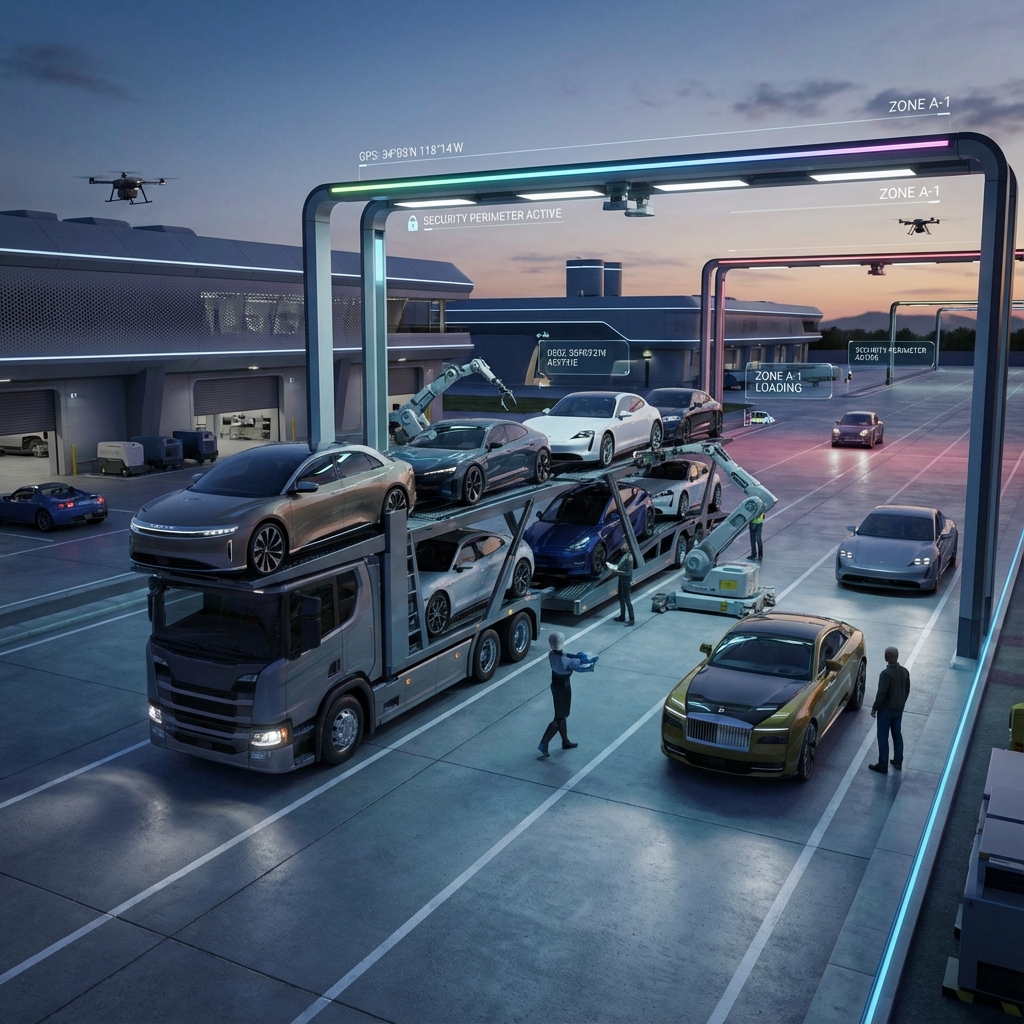
The landscape of American logistics is undergoing a silent but profound metamorphosis. For decades, the "truck yard" was a term synonymous with grit, gravel, and grease””a utilitarian dirt lot where heavy machinery from the oilfields of West Texas or the Bakken formation was parked between shifts. These spaces were designed for durability, not delicacy. They were built to withstand the weight of 40,000-pound drill pipes and the relentless churning of industrial tires.
However, as we move through 2026, the definition of industrial infrastructure is being rewritten. The same strategic geographic hubs that once served the oil and gas boom are being reimagined as high-tech staging grounds for the interstate vehicle transport industry. This transition from "heavy metal" storage to "high-value" asset management represents a massive leap in logistics quality. Today, a modern car shipping hub is less of a parking lot and more of a precision-engineered laboratory.
At Shipping a Car Cross Country, we recognize that the safety of your vehicle doesn't just depend on the driver's skill on the open road; it depends on the integrity of every square foot of ground your car touches during its journey. This is why we have invested heavily in understanding and utilizing modern trucking infrastructure as the primary pillar of our service reliability.
The Heritage of the Hub: Why Oilfield Geography Matters
To understand where we are going in 2026, we must look at where we started. The oilfield service industry perfected the art of "staging." When a new rig is set up, thousands of components””from drill bits to housing units””must arrive in a specific, high-pressure sequence. This required massive acreage located near major interstate arteries like I-10, I-20, and I-35. These corridors are the circulatory system of American commerce, and their proximity to historical industrial hubs is no coincidence.
The Permian Basin in West Texas, the Eagle Ford Shale, and the Bakken formation in North Dakota didn't just produce energy; they produced an unprecedented blueprint for large-scale logistical coordination. These regions necessitated the creation of massive "laydown yards" where equipment could be inspected, sorted, and prepared for the final mile. As the energy sector”™s logistical needs shifted toward more automated and centralized operations, these vast expanses of industrial land became the perfect skeleton for the automotive logistics explosion.
The location of these yards provides a strategic advantage for reliable car shipping companies. They sit at the nexus of major corridors, allowing for efficient state-to-state vehicle transport and regional network connectivity. Instead of a single truck driving 3,000 miles with the same load, modern logistics utilizes these hubs to optimize routes, switch drivers to ensure compliance with rest regulations, and consolidate shipments for maximum efficiency. This reduces the time a car spends in transit and minimizes the wear and tear on the transport equipment itself.
But while the location remains the same, the requirements have changed entirely. In the past, a driver could "drop and hook" a trailer in a mud lot without a second thought. Moving a 2026 electric vehicle (EV) or a high-performance luxury SUV requires a level of environmental and structural control that a traditional oilfield lot simply couldn't provide for standard open transport hauling. The transition from simple industrial storage to sophisticated vehicle staging is now the very foundation of modern shipping reliability.
The Evolution of the Staging Yard: From Dirt to Digital
The "truck yards" of twenty years ago were passive spaces. They were places where things sat. In 2026, the modern hub is an active participant in the transport process. This evolution was driven by the increasing value and complexity of the cargo. A single car carrier today might be hauling $1.5 million worth of electric vehicles and luxury sedans. At that price point, the "dirt lot" mentality isn't just outdated; it's a liability.
The modernization of these facilities involved a complete overhaul of the physical and digital landscape. We have moved from manual logbooks and chain-link fences to cloud-based management systems and "smart" perimeters. This shift ensures that every vehicle is accounted for at a granular level, reducing the "dead time" where a vehicle sits idle and unprotected. This is what we call "Infrastructure Intelligence."
The transition to high-tech truck yards also means a transformation in data transparency. In the past, once a car entered a yard, it essentially fell into a "black hole" until it was scanned onto the next truck. Today, every hub in our network acts as a data node, illustrating how the digital logistics revolution allows "smart" roads to work with "smart" data. Using IoT (Internet of Things) sensors and advanced computer vision, we can monitor the health and status of every vehicle in real-time. If a severe weather front is approaching a staging ground in Nebraska, our systems automatically trigger a priority loading or move vehicles to covered protection areas.
2026 Standards: The Anatomy of a Modern Staging Ground
What does a state-of-the-art vehicle staging facility look like today? It is no longer enough to have a fenced-in area. The "2026 Standard" for infrastructure intelligence is built on several key pillars: Physical Integrity, Technological Synchronization, Absolute Security, and Environmental Control. These standards ensure that interstate car transport is as safe as it is efficient.
1. Precision-Paved Surfaces and Damage Prevention
In the old days of trucking, "all-weather surfacing" usually meant more gravel or crushed limestone. For car shipping, gravel is a primary enemy. It kicks up dust that can settle into fresh paint, and more importantly, it creates "unstable topography." When a vehicle is loaded onto a trailer, the angle of the ramps must be precise. On an uneven gravel surface, the truck can tilt slightly, causing a car”™s undercarriage to scrape or "bottom out." This is particularly dangerous for modern performance cars with low ground clearance or EVs where the battery pack is located on the chassis floor.
Modern hubs are now dominated by reinforced, heat-reflective paving. These surfaces are engineered to remain perfectly level under the weight of multi-car carriers (which can exceed 80,000 lbs when fully loaded). We utilize high-compaction concrete and specialized asphalt polymers that resist tracking and "rutting" during hot summer months. Furthermore, these surfaces minimize the "heat island" effect. In 2026, we understand that excessive ground heat can stress EV batteries during summer staging. By utilizing specialized coatings that reflect up to 70% of solar radiation, we keep the ambient temperature of the yard lower, preserving the health of your vehicle”™s sensitive electronics and battery cells.
2. GPS-Synced Loading Zones: The End of "Where”™s My Car?"
In 2026, the "lost in the lot" phenomenon is a relic of the past. Modern staging yards utilize Real-Time Location Systems (RTLS) and GPS-synced loading zones. When a vehicle enters the facility, its "Digital Twin" is created in the management system. This digital record includes the exact GPS coordinates of the parking spot, the VIN, current battery/fuel levels, and a 360-degree high-resolution condition report.
Loading zones are now geofenced. This means a car carrier cannot be "marked" as loaded until the GPS coordinates of the vehicle and the truck align within a three-foot margin of error. This synchronization ensures that Shipping a Car Cross Country maintains a 100% accuracy rate in load sequencing. If a car is destined for a specific drop-off in a multi-state route, the infrastructure itself guides the loader to place it in the optimal position””ensuring that the cars to be delivered first are the ones most accessible on the trailer. This eliminates the need for expensive and risky "re-shuffling" of cars during the trip.
3. High-Security Ecosystems
The security fencing of the past””often just chain-link with a padlock””has been replaced by integrated security ecosystems. Modern hubs utilize 24/7 monitored facilities equipped with AI-driven thermal imaging. These systems can distinguish between a stray animal and an unauthorized human in total darkness, triggering immediate alerts to on-site security and local law enforcement. This level of AI security is non-negotiable for high-value auto transport.
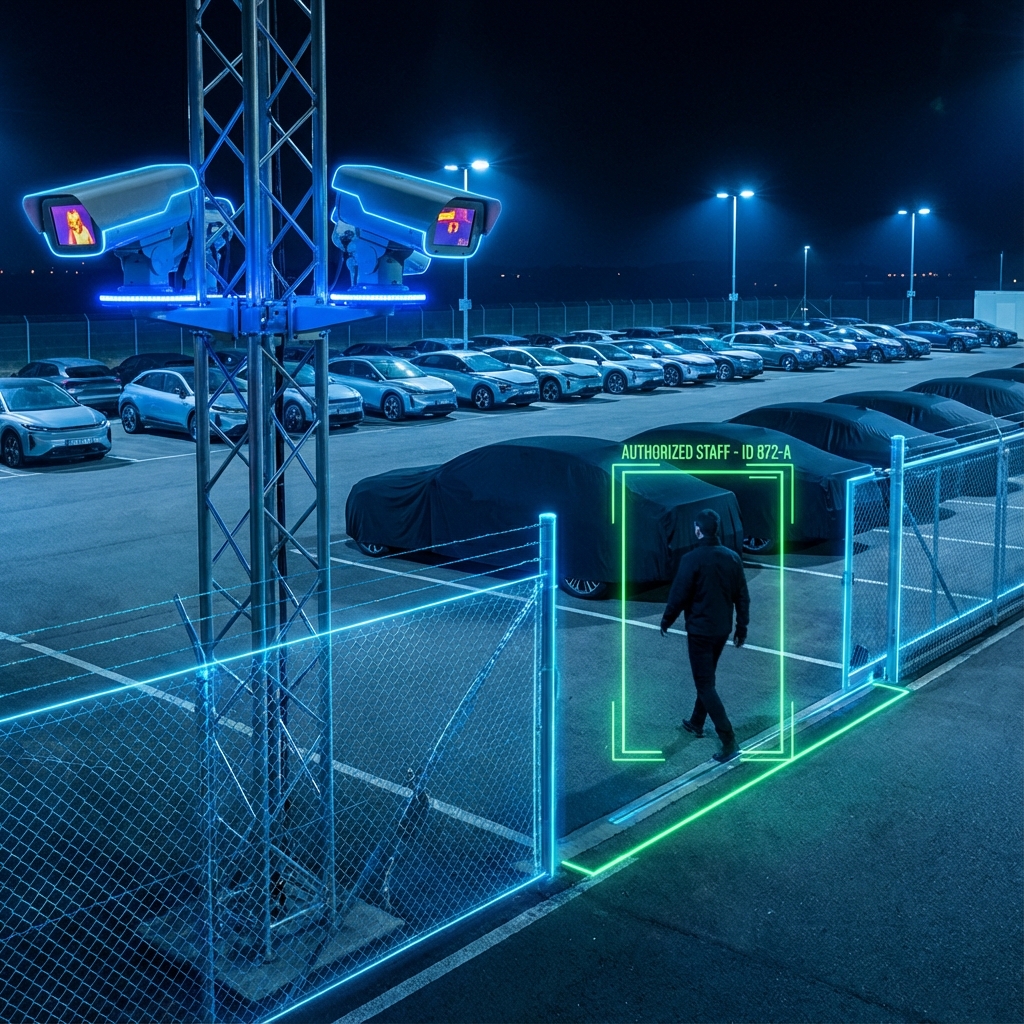
These hubs are high-security vaults. Access is controlled via encrypted digital keys or biometric scanners, ensuring that only certified loaders and drivers ever come within reach of the vehicles. Furthermore, the perimeter is protected by "smart" sensors that detect vibrations or cutting attempts. This level of oversight is essential when managing the transport of high-value assets across state lines. In 2026, security is not just a fence; it”™s a multi-layered digital barrier that provides absolute peace of mind for our clients.
4. Advanced Lighting and Visibility Systems
Safety isn't just about preventing theft; it's about preventing accidents. Traditional truck yards were often dimly lit, leading to "minor" dings and scratches during night-time loading. The 2026 standard requires "daylight-mimicking" LED arrays that eliminate shadows and glare. These lighting systems are designed with high Color Rendering Index (CRI) ratings, which is crucial for our digital inspection process.
This allows our inspectors to perform high-resolution digital condition reports at any hour of the day or night, ensuring that every existing mark is documented and every new one is prevented. When a car is loaded under high-intensity LED lighting, even the smallest imperfection is visible. This level of transparency protects both the customer and the carrier, creating a clear "chain of custody" for the vehicle's physical condition.
The Technological Bridge: Managing the Network
The transition from "truck yard" to "logistics hub" is fueled by the need for precision. When you ship a car across the country, you aren't just paying for the miles on the road; you are paying for the safety of the stops in between. A car traveling from Seattle to Miami might sit in three different staging areas during its journey. In the old model, each stop was a "black hole" of information. In the 2026 model, these stops are data-rich checkpoints.
We utilize the latest staging tech to monitor several key metrics that directly impact the success of your shipment:
- Dwell Time Optimization: We use predictive analytics to ensure no vehicle sits longer than necessary. Our system identifies bottlenecks in the network and automatically redirects carriers to less congested hubs, keeping your vehicle moving toward its destination.
- Ambient Condition Monitoring: IoT sensors track humidity and temperature in our premium staging zones. This is vital for protecting delicate interior materials like fine leather, Alcantara, and carbon fiber trim from extreme environmental stress.
- Digital Handling Logs: Every time a door is opened, a key is turned, or a vehicle is moved, it is logged digitally. This "blockchain" of activity ensures that there are no unauthorized uses or movements of your property while it is in our care.
This infrastructure intelligence allows us to manage a high-security network that acts as a protective bubble around your vehicle. We don't just move cars; we manage the environment in which they exist throughout their entire journey. If you need a detailed price estimate for your specific route, you can use our pricing guide and calculator to see how our infrastructure investments translate into competitive rates.
Why 2026 Logistics Require "Precision Engineering"
The vehicles of 2026 are more sophisticated than ever. With the rise of advanced driver-assistance systems (ADAS) and sensitive sensor arrays located in bumpers, grilles, and windshields, the margin for error in handling has shrunk to nearly zero. A minor "bump" that would have only scratched a 1990s bumper can now result in a $5,000 repair bill for a LiDAR sensor or ultrasonic array. A modern logistics hub must account for these technical realities.
Our staging grounds are designed for EV shipping logistics and precision handling, focusing on three critical areas:
- Sensor Calibration Protection: Modern yards are designed to be "vibration-neutral." We ensure that high-value vehicles are not stored near heavy industrial equipment or in high-vibration environments that could potentially disrupt the delicate calibration of ADAS cameras and sensors. Even the frequency of the yard's lighting is optimized to avoid interference with certain vehicle communication protocols.
- EV State of Charge (SoC) Management: Electric vehicles are a massive part of the 2026 fleet. Staging grounds now include "Charge-Ready" zones. If a vehicle's battery drops below a certain threshold (typically 20%) during its cross-country journey, our automated systems flag it for a "trickle-charge." This ensures the battery remains in its healthy "shelf-life" range and that the car arrives at its destination with enough power to be driven off the trailer and to a local charging station.
- Climate-Adaptive Staging: For high-end vehicles, specialized hubs now offer "environmental buffers." These are covered or semi-enclosed staging areas that protect against the salt-air of coastal routes (which can cause flash-corrosion on bare metal components) or the extreme UV exposure of the desert Southwest (which can degrade clear coats and interior plastics over time).
By treating the vehicle as a piece of sensitive technology rather than just a piece of metal, we align our logistics practices with the engineering of the cars we carry. This is the hallmark of 2026 logistics standards.
The Human Factor: Training for the New Infrastructure
While the infrastructure is high-tech, the human element remains vital. The transition from oilfields to auto-haulers required a massive retraining of the workforce. The "rough and tumble" loader who worked with oil pipes is not the same professional who handles a $200,000 Lucid Air or a vintage Porsche 911. The mentality has shifted from "moving weight" to "managing assets."
Our network utilizes virtual reality (VR) training modules to simulate the loading process in our specific 2026-standard yards. Drivers and yard personnel are trained on the specific geofencing software and digital inspection tools that make our hubs the safest in the country. They learn to navigate the vehicle staging grounds with the precision of a scholar. This synergy between "smart" ground and "smart" people is what creates true reliability. Every individual in our chain of custody understands that they are stewards of some of our clients' most valuable possessions.
Infrastructure as a Competitive Advantage
In the shipping industry, many companies claim to be the fastest or the cheapest. However, in 2026, the real differentiator is infrastructure. Any broker can hire a truck, but only a company with a dedicated, high-tech staging network can guarantee the integrity of the vehicle. Cheap shipping often comes at the hidden cost of "public" or "third-party" lots that lack security, proper paving, or professional oversight.
By controlling the staging points, Shipping a Car Cross Country eliminates the variables that lead to damage. We don't rely on third-party "public" lots that are open to the elements and unauthorized foot traffic. We invest in the "Backbone"””the physical and digital staging grounds that ensure the vehicle you receive is in the exact same condition as the vehicle you gave us. This investment allows us to offer superior enclosed transport and luxury car protection plans because our risk profile is significantly lower than competitors who cut corners on infrastructure.
The Global Context: American Infrastructure in 2026
The United States is currently seeing a massive "re-shoring" of automotive manufacturing. With new battery plants and assembly lines opening across the "Battery Belt" in the Southeast and Midwest, the demand for sophisticated vehicle staging has never been higher. The transition of old industrial sites into these new logistics hubs is a key part of American economic resilience. We are taking the industrial bones of the past and skinning them with the technology of the future.
This macro-economic shift means that the modern trucking infrastructure we use today is part of a larger, national commitment to logistics excellence. When you choose a carrier that utilizes these advanced hubs, you are supporting a technological ecosystem that keeps America at the forefront of global trade. The quality of our roads, yards, and bridges is literally the ground upon which our economy stands, driving the massive car shipping industry growth we see today.
Conclusion: The Future of Vehicle Relocation
The shift from industrial oilfield infrastructure to high-tech automotive staging is more than just a renovation of real estate””it is a revolution in the philosophy of transport. It marks the end of the "rough and tumble" era of trucking and the beginning of a new age of white-glove logistics. Reliability is no longer a matter of luck; it is a matter of engineering.
At Shipping a Car Cross Country, we provide the infrastructure intelligence required for modern vehicle relocation. We recognize that the quality of the journey is determined by the quality of the hubs along the way. The transition from simple industrial storage to sophisticated vehicle staging represents a massive leap in logistics quality. While the "truck yards" of the past were merely dirt lots for heavy machinery, today”™s cross-country moves require precision-engineered hubs.
We don't just move cars; we manage a high-security network. We utilize the latest staging tech and 24/7 monitored facilities to ensure your vehicle is protected from the moment it leaves your driveway until it reaches its destination in 2026 and beyond. The backbone of reliable car shipping isn't just the truck on the highway; it”™s the sophisticated, high-security network of staging grounds that keep the wheels of American commerce turning with precision, transparency, and absolute peace of mind. Get an instant quote for your next move.
Frequently Asked Questions
Ready for a Precision Shipping Experience?
Experience the difference that modern infrastructure makes. Protect your investment with the industry's most advanced staging and transport network.