
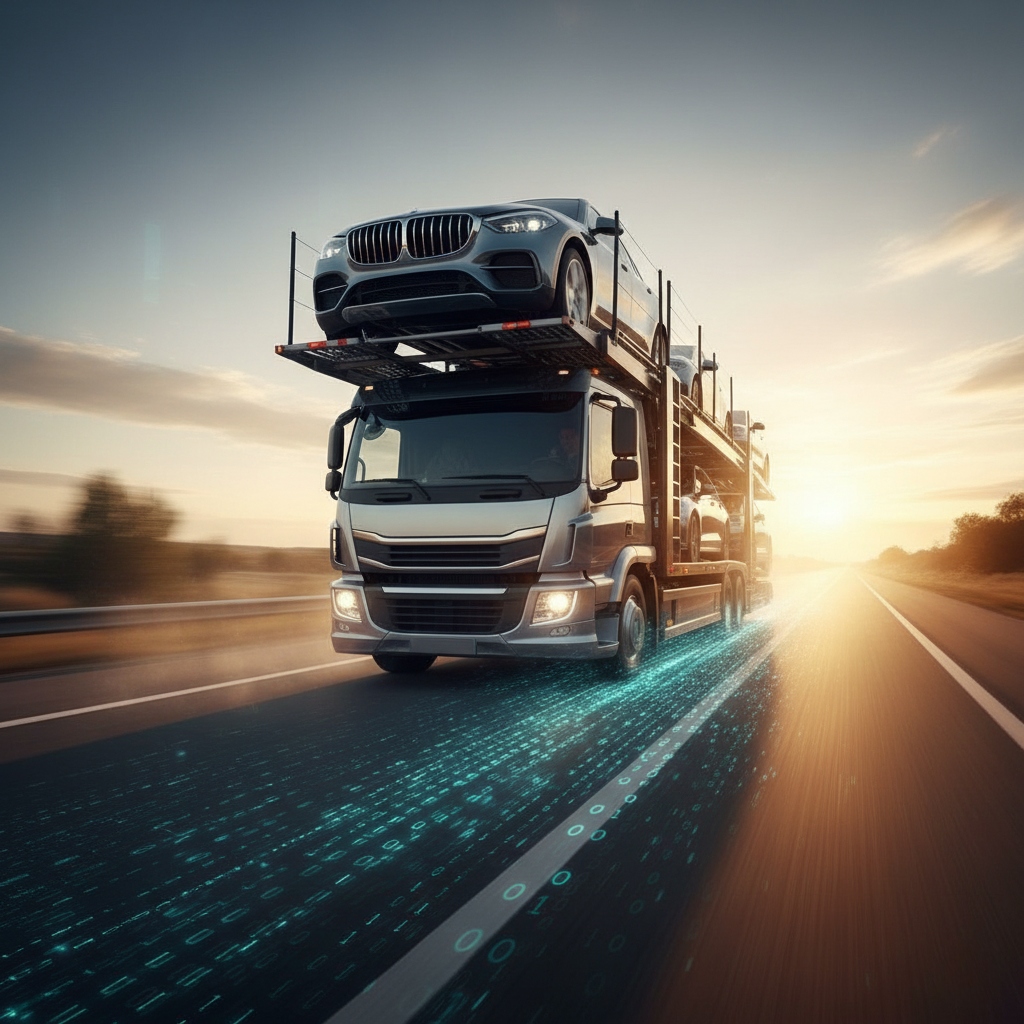
The auto transport industry was once a world governed by the "Big Three": physical clipboards, landline telephones, and the massive, chaotic energy of the central dispatch board. For decades, if you wanted to move a vehicle from New York to California, you were essentially entering a high-stakes game of telephone. A broker would call a carrier, who would check a paper log, who would then call a driver on a CB radio or an early cellular brick. Information was delayed, transparency was non-existent, and "real-time" was a concept reserved for science fiction.
Fast forward to 2026, and the landscape is unrecognizable. We are no longer just in the business of moving metal; we are in the business of managing data. The Digital Logistics Revolution hasn't just improved the industry””it has completely rebuilt it from the ground up. This evolution represents a fundamental change in how value is delivered to the customer and how safety is maintained on our national highways. At Shipping A Car Cross Country, we have embraced this data-driven auto transport model to ensure absolute precision. Our cross-country shipping services are now more efficient than ever.
The Death of the Manual Era: A Post-Mortem of Inefficiency

To understand where we are going, we must acknowledge the staggering limitations of where we've been. The "legacy" model of car shipping was defined by manual intervention at every touchpoint, which created a ripple effect of delays and hidden costs. This inefficiency was the primary driver for the industry-wide shift toward car shipping technology 2026 standards.
1. The Chaos of Manual Dispatching
In the early 2000s, dispatching was a reactive art form. Dispatchers sat in front of monitors””or literal whiteboards””trying to piece together routes based on who happened to answer the phone first. This led to massive inefficiencies that plagued the industry for years:
- The Deadhead Dilemma: Trucks would often drive hundreds of miles "empty" (known as deadheading) because a dispatcher couldn't find a local load in time. In a manual system, visibility into available inventory was limited to the dispatcher's immediate network.
- Logistical Fragmentation: Because information lived in silos, a carrier might have three empty slots on a trailer while a customer only ten miles away was being told no trucks were available for two weeks.
- Economic Impact: These inefficiencies didn't just hurt the carrier's bottom line; they increased costs for the consumer and slowed down the entire supply chain, making cross-country transport a stressful and expensive endeavor.
2. The "Black Box" of Transit
Once a car was loaded onto a trailer in the manual era, it effectively entered a "black box." The communication chain was fragile and slow. The customer had no way of knowing where their vehicle was located unless they called the broker. The broker would then call the carrier's office, the office would try to reach the driver, and the driver (who shouldn't be answering the phone while driving) would eventually call back.
This information gap meant that by the time an answer reached the customer, the information was likely six to twelve hours old. In a world where people could track a $15 pizza in real-time, tracking a $50,000 vehicle was ironically impossible. Today, real-time car tracking has eliminated this frustration entirely.
3. The Paper Trail Nightmare
The Bill of Lading (BOL) is the most critical document in auto transport””it serves as the contract, the receipt, and the condition report. Historically, this was a multi-part carbon copy form that was prone to every imaginable human error. These papers were easily lost, smudged by grease, or destroyed by rain during a messy loading process. This led to disputes and insurance headaches that could drag on for months. The introduction of eBOL technology was the definitive solution to this paper-based vulnerability.
The 2026 Reality: AI-Driven Intelligence and the Cloud
As we navigate 2026, the "Digital Shift" has moved from a luxury to a baseline requirement. Modern logistics providers have traded the clipboard for the cloud, utilizing a sophisticated stack of technologies that ensure precision at every mile. This is the core of AI-driven dispatching, working in tandem with the hardware side of the tech revolution showcased in our guide on modern trucking infrastructure.
AI-Driven Route Optimization: The Neural Network Advantage
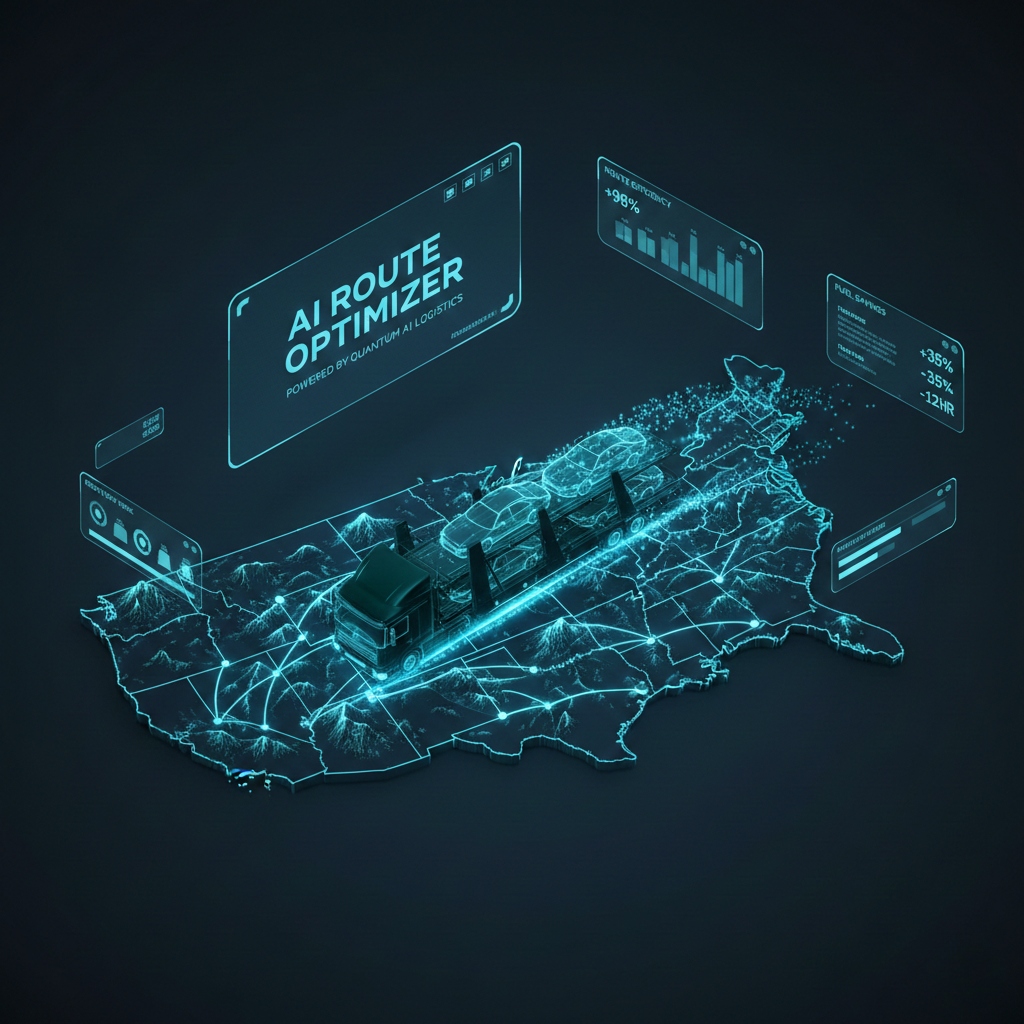
In the past, a "good route" was determined by a driver's intuition or a basic GPS. Today, it is determined by neural networks that process millions of data points per second. This isn't just about finding the shortest path; it's about finding the safest and most efficient path for shipping a car cross country safety.
- Predictive Weather Patterns: AI models now integrate with global meteorological data to adjust routes 48 to 72 hours in advance. If a blizzard is projected for the Rockies, the system automatically reroutes carriers through a southern corridor.
- Real-Time Traffic Analytics: AI can divert loads away from major highway construction or seasonal bottlenecks before the driver even sees the brake lights.
- Load Balancing: The algorithm calculates the sequence of pick-ups and drop-offs to ensure the trailer stays at maximum capacity, reducing "empty miles" by up to 40% and lowering the carbon footprint.
The Rise of the Digital Bill of Lading (eBOL)
The transition to digital Bill of Ladings (eBOL) has been the single greatest win for consumer transparency in a generation. In 2026, the inspection process is a high-tech ritual that protects both the owner and the carrier. Drivers use ruggedized tablets to take 360-degree, high-definition photos and videos of the vehicle, which are automatically timestamped and geo-tagged.
The moment the customer and driver sign the tablet, the data is synced to the cloud, allowing for rapid dispute resolution. Insurance claims that used to take ninety days are now often settled in less than 72 hours because the data is stored on a secure, tamper-proof ledger.
Real-Time Driver Tracking and Telematics
Today's customers demand an "Amazon-style" interface for all high-value services. Modern auto logistics meets this demand through integrated GPS telematics. Tracking is no longer dependent on a driver's cell phone; it is integrated directly into the truck's Electronic Logging Device (ELD). This level of tracking ensures drivers are adhering to mandatory "Hours of Service" (HOS) regulations, enhancing overall safety accountability.
Predictive Analytics: Solving Problems Before They Happen
The most advanced shift in 2026 is the move from reactive logistics (fixing problems that have already happened) to predictive logistics (preventing them from occurring). This is the hallmark of the Digital Logistics Revolution.
Anticipating the National Shipping Grid
Using a decade's worth of historical shipping data, AI models can now anticipate "chokepoints" in the national grid. For example, Seasonal Surge Management allows systems to begin securing capacity and optimizing trailer space months in advance of the "Snowbird" spike from Florida to New York, smoothing out the price curve for the consumer. This data-driven approach ensures stability in a moving market.
IoT and Predictive Maintenance
A truck breaking down on the side of the road is the number one cause of delivery delays. Modern carriers utilize Internet of Things (IoT) sensors to monitor the health of the transport vehicle. Sensors track everything from tire pressure to engine oil viscosity””even utilizing specialized electric car software for EV battery monitoring during transit. If a sensor detects an unusual vibration, the driver is routed to a service center before a catastrophic failure occurs, keeping the delivery schedule intact. This is especially important for expedited shipping routes.
The Human Element in a Digital World: Quality Over Quantity
A common misconception is that the "Digital Shift" is designed to replace humans with robots. In reality, the goal is to empower humans to provide better service. By removing the tedious work of "phone tag" and manual data entry, we ensure automated compliance and that emergency permits & safety standards are met through digital documentation, allowing logistics professionals to focus on what truly matters: The Customer Experience.
Empowering the Logistics Specialist
When technology handles the routine aspects of routing and tracking, human staff are free to manage complex edge cases. This includes coordinating the transport of multimillion-dollar exotics or overseeing large-scale corporate moves. Logistics agents can now spend their time providing proactive communication, helping customers understand the best methods for their specific needs, such as the choice between enclosed auto transport or standard open trailers.
Why "Data-Driven" Matters to the Everyday Consumer
If you are moving a car cross-country in 2026, you are paying for a secure, transparent, and predictable experience. The benefits of data-driven auto transport are tangible:
- Lower and More Stable Costs: Efficient routing and the elimination of deadheading leads to lower overhead, which is passed directly to the customer.
- Enhanced Vehicle Safety: Digital inspections and IoT monitoring ensure your car is handled with documented care at every step.
- Unmatched Peace of Mind: Seeing your vehicle's location on your smartphone removes the anxiety of high-transparency door-to-door vehicle transport during long-distance moves.
- Environmental Responsibility: Optimized routes reduce the carbon footprint per vehicle moved.
The Future of the Industry: Beyond 2026
As we look toward the end of the decade, the digital shift will only accelerate. We are already seeing early testing of autonomous long-haul convoys and blockchain-based smart contracts. The transition from the manual era to the digital era wasn't just an upgrade; it was a revolution that turned a fragmented industry into a streamlined, professional service sector. You can learn more about these standards in our pricing and technology guide.
Frequently Asked Questions
Conclusion: Leading the Charge into 2026
Moving a vehicle across state lines has evolved from a game of phone tag to a precise digital science. The "old way" was about survival; the "new way" is about optimization and exceeding expectations. At Shipping A Car Cross Country, we are proud to lead the way in transparent, efficient, and data-driven car shipping for 2026 and beyond. The future of logistics isn't just coming””it's already here, and it is driven by data.
Experience the Digital Logistics Revolution
Ready to ship your car with the precision of 2026 technology? Get your instant, data-driven quote today.