

Every year, millions of Americans relocate across state lines for a new job, a military reassignment, college, retirement, or simply a fresh start. And every one of them eventually asks the same question: how do I get my car there without driving it myself?
Vehicle transport cross country, sometimes called auto shipping or car hauling, solves exactly that problem. A professional carrier picks up your vehicle and delivers it to your new address, often while you fly or drive a smaller load separately. But the industry is also full of vague pricing, unlicensed brokers, and last minute surprises. This guide walks through exactly what to expect, what it costs, and how to avoid the mistakes that catch first timers off guard.
What Is Cross Country Vehicle Transport, Exactly?
Cross country vehicle transport is a door to door (or terminal to terminal) service where your car, truck, SUV, or motorcycle is loaded onto a multi car carrier and driven to its destination by a professional trucking company. You don't put miles on your engine, you don't deal with unfamiliar highways, and you arrive at your new home without the fatigue of a multi day drive.
There are two main players in the process:
- Brokers: companies that don't own trucks themselves but connect you with a network of vetted carriers, often getting better rates through volume.
- Carriers: the actual trucking companies that own the trailers and physically transport your vehicle.
Many customers book through a broker without realizing it, which is fine as long as the broker is transparent about who will actually be driving your car. When booking, utilizing specialized cross country shipping services ensures your vehicle is handled by experienced long distance haulers.
How Much Does It Really Cost?
Auto transport pricing isn't a flat rate, it's calculated per mile, and the per mile cost actually drops as distance increases, because fixed costs (fuel, permits, driver time) get spread across more miles.
Here's a realistic breakdown for a mid size sedan in 2026:
| Route Length | Estimated Cost Range | Cost Per Mile |
|---|---|---|
| Under 500 miles | $400 to $700 | $1.00 to $1.50 |
| 500 to 1,500 miles | $700 to $1,200 | $0.70 to $1.00 |
| 1,500 to 2,500 miles (true cross country) | $1,000 to $1,800 | $0.45 to $0.75 |
| 2,500+ miles (e.g., NY to CA) | $1,200 to $2,000+ | $0.40 to $0.65 |
Five factors move these numbers up or down:
- Vehicle size and weight: A pickup truck or SUV takes up more trailer space than a compact car, so expect to pay 15 to 30% more than sedan pricing.
- Trailer type: Open transport (the industry default) is cheapest. Enclosed transport, used for classic cars, exotics, and luxury vehicles, typically runs 30 to 40% higher.
- Route popularity: Shipping along major corridors like I-10, I-80, or I-95 is cheaper because carriers run those routes constantly and rarely drive empty. Remote or rural pickup or delivery points cost more.
- Season: Summer (May through September) is peak relocation season, driven by families moving between school years. Prices can rise 10 to 20% during this window, and trucks book up faster.
- Pickup or delivery flexibility: A rigid, non negotiable date costs more than giving the carrier a 2 to 3 day pickup window.
A good rule of thumb: if a quote is dramatically lower than every other quote you've received, be cautious, as it's often a bait and switch price that gets renegotiated once your car is already on the schedule. Check exact rates using our auto shipping rates calculator.
Step by Step: How the Shipping Process Actually Works
Request multiple quotes
Get at least 3 quotes from licensed carriers or brokers. Compare not just price, but insurance coverage and estimated pickup windows.
Verify licensing
Any legitimate auto transport company should be registered with the Federal Motor Carrier Safety Administration (FMCSA) and carry cargo insurance. You can look up a company's USDOT number on the FMCSA's public database before booking.
Book 2 to 3 weeks in advance when possible
Especially during summer months. Last minute bookings usually mean higher prices and fewer carrier options.
Prepare the vehicle
Wash your car so pre existing scratches and dents are easy to spot in photos. Remove personal belongings (most carriers won't insure items left inside), leave a quarter tank of gas, and document the vehicle's condition with timestamped photos from all angles.
Pickup and inspection
The driver will complete a joint walkaround with you and log the vehicle's condition on a Bill of Lading. Read this document carefully before signing, as it's your primary reference if you need to file a damage claim later.
Transit time
A true cross country shipment typically takes 7 to 10 days, though this varies with weather, route, and the carrier's other stops along the way. Ask for a realistic window rather than a single guaranteed date.
Delivery inspection
Walk around the vehicle again at delivery and compare its condition to the pickup Bill of Lading before signing off and paying the remaining balance.
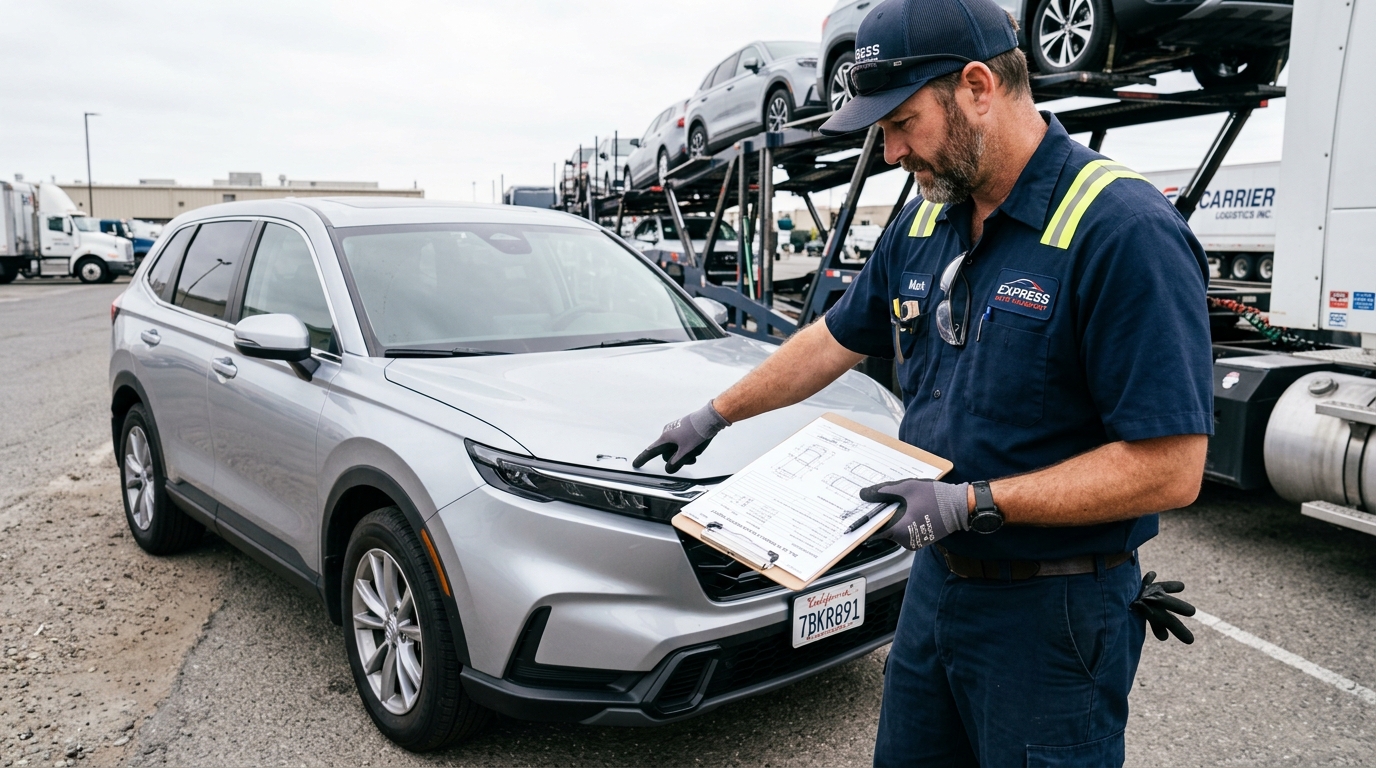
Always inspect your vehicle and verify details on the Bill of Lading during pickup and delivery.
Open vs. Enclosed Transport: Which One Do You Need?
| Factor | Open Transport | Enclosed Transport |
|---|---|---|
| Average cost | Lower (industry standard) | 30 to 40% higher |
| Weather and road debris exposure | Yes | No |
| Best suited for | Everyday sedans, SUVs, trucks | Classic cars, exotics, luxury vehicles |
| Carrier availability | High (most trucks on the road) | Lower (book further in advance) |
| Typical capacity | 7 to 10 vehicles per trailer | 1 to 2 vehicles per trailer |
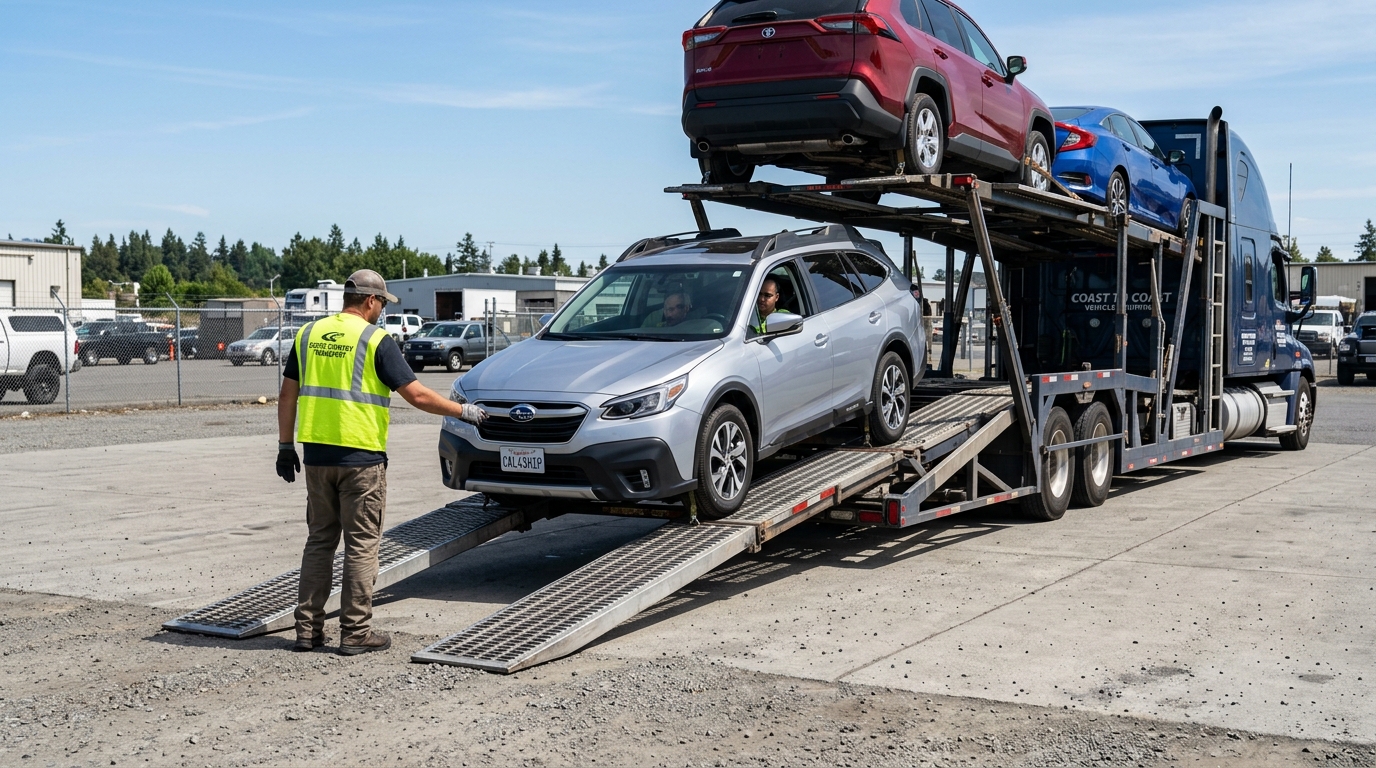
Open Transport
Standard open carrier haulers suitable for daily drivers and standard passenger vehicles.
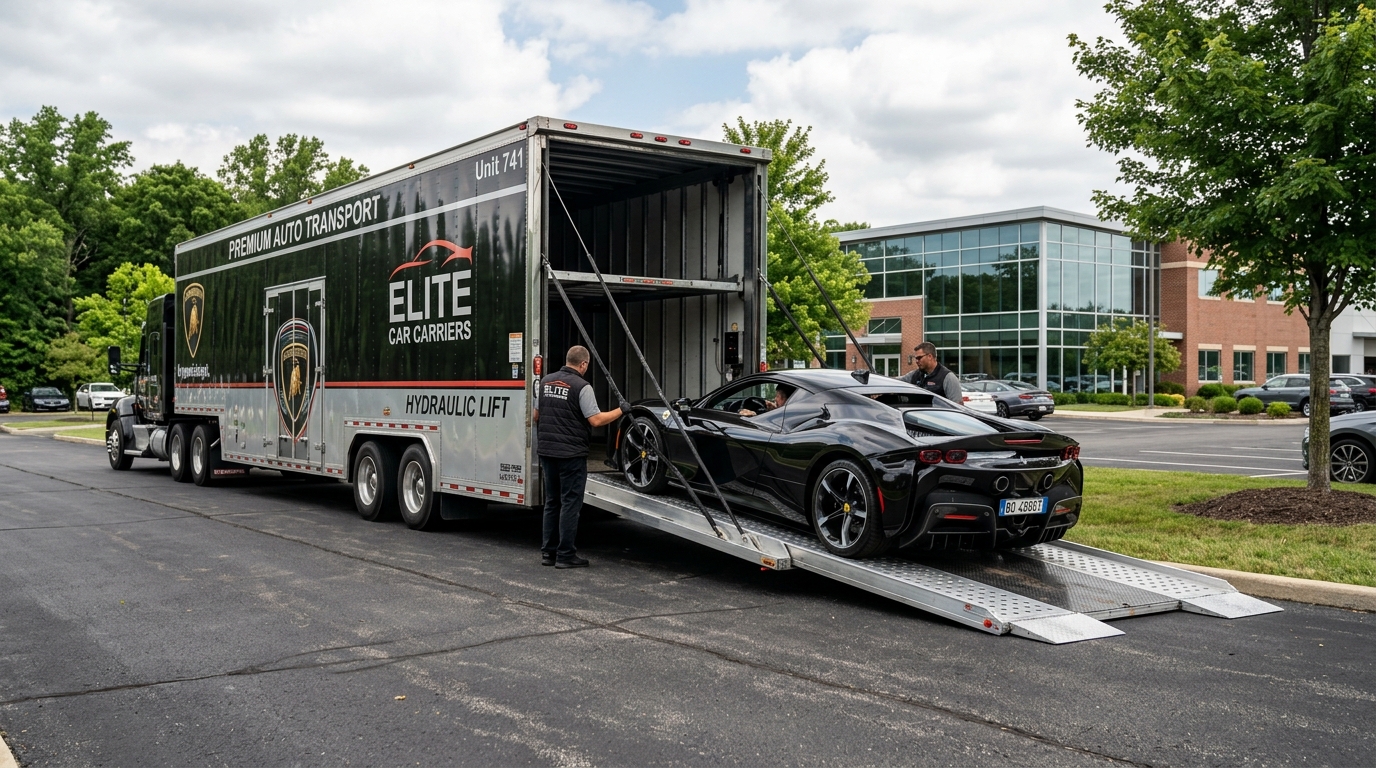
Enclosed Transport
Hard sided enclosed trailers for maximum protection against weather, dirt, and road debris.
For the vast majority of moves, open transport is completely safe, as it's how new cars are delivered to dealerships nationwide. Enclosed transport is worth the premium only if your vehicle has significant value, rarity, or sentimental importance that justifies extra protection. Learn more about our open transport and enclosed transport services.
Red Flags That Signal a Scam or Unreliable Carrier
The auto transport industry has its share of bad actors. Watch for:
- Large upfront deposits before a truck is even assigned to your order.
- No FMCSA registration or a USDOT number that doesn't match the company name.
- Pressure to book immediately using artificially inflated "today only" pricing.
- Vague insurance answers: a legitimate carrier can tell you their coverage limits without hesitation.
- Wildly inconsistent quotes from the same source, sometimes a sign the company is low balling to win the booking, then renegotiating later.
If something feels off, it usually is. There are enough licensed, reputable carriers that you don't need to take a risk on one that raises red flags.
Frequently Asked Questions
How long does cross country car shipping take?
Most cross country shipments take 7 to 10 days from pickup to delivery, depending on distance, route, and weather conditions.
Is my car insured during transport?
Yes, legitimate carriers carry cargo insurance that covers your vehicle in transit. Always ask for proof of insurance and coverage limits before booking, and consider photographing your car's condition beforehand as extra documentation.
Can I put personal items in the car during shipping?
Most carriers discourage it and won't insure personal belongings left inside, though a small, light bag in the trunk is sometimes tolerated. Check your carrier's specific policy first.
Is door to door delivery always available?
In most cases, yes, but very large carriers sometimes can't access narrow streets, gated communities, or low clearance areas. In those situations, they'll arrange a nearby meeting point instead. Explore our door to door car shipping page for details.
Do I need to be present at pickup and delivery?
You or an authorized representative needs to be present to complete the vehicle inspection and sign the Bill of Lading at both ends.
Final Thoughts
Shipping a vehicle cross country doesn't have to be stressful once you understand how pricing works, what a normal timeline looks like, and which red flags to avoid. Booking a couple of weeks ahead, comparing multiple licensed carriers, and documenting your vehicle's condition at pickup are the three habits that consistently lead to a smooth, surprise free delivery.
Ready to see real pricing for your route?
Get an accurate, instant vehicle transport quote backed by verified carrier rates and zero hidden fees.
Get a free instant quote